

skip to main content

Does DIY Mold Remediation Work?

Finding mold in your crawl space or basement is unsettling, and the instinct to handle it yourself is understandable. But spray bottle mold removers don't penetrate porous materials, disturbing a colony without containment spreads spores, and cleaning visible growth doesn't fix the moisture problem driving it.

Quick Summary

Spray bottle mold removers treat the surface but don’t penetrate porous materials like wood joists and drywall. Visible mold growth is rarely the full extent of the problem, and without fixing the moisture source driving it, mold comes back. Disturbing a mold colony without proper containment spreads spores further into the home. Professional mold remediation covers all of it.

Why DIY Mold Remediation Doesn’t Work

Finding mold in your crawl space or basement is unsettling, and the instinct to handle it immediately is understandable. A trip to the hardware store, a bottle of mold killer, and a few hours on a Saturday seems like a reasonable response. The problem is that mold doesn’t work the way that approach assumes it does, and in many cases, DIY attempts make the situation worse before they make it better.

Does Spray Bottle Mold Remover Actually Work?

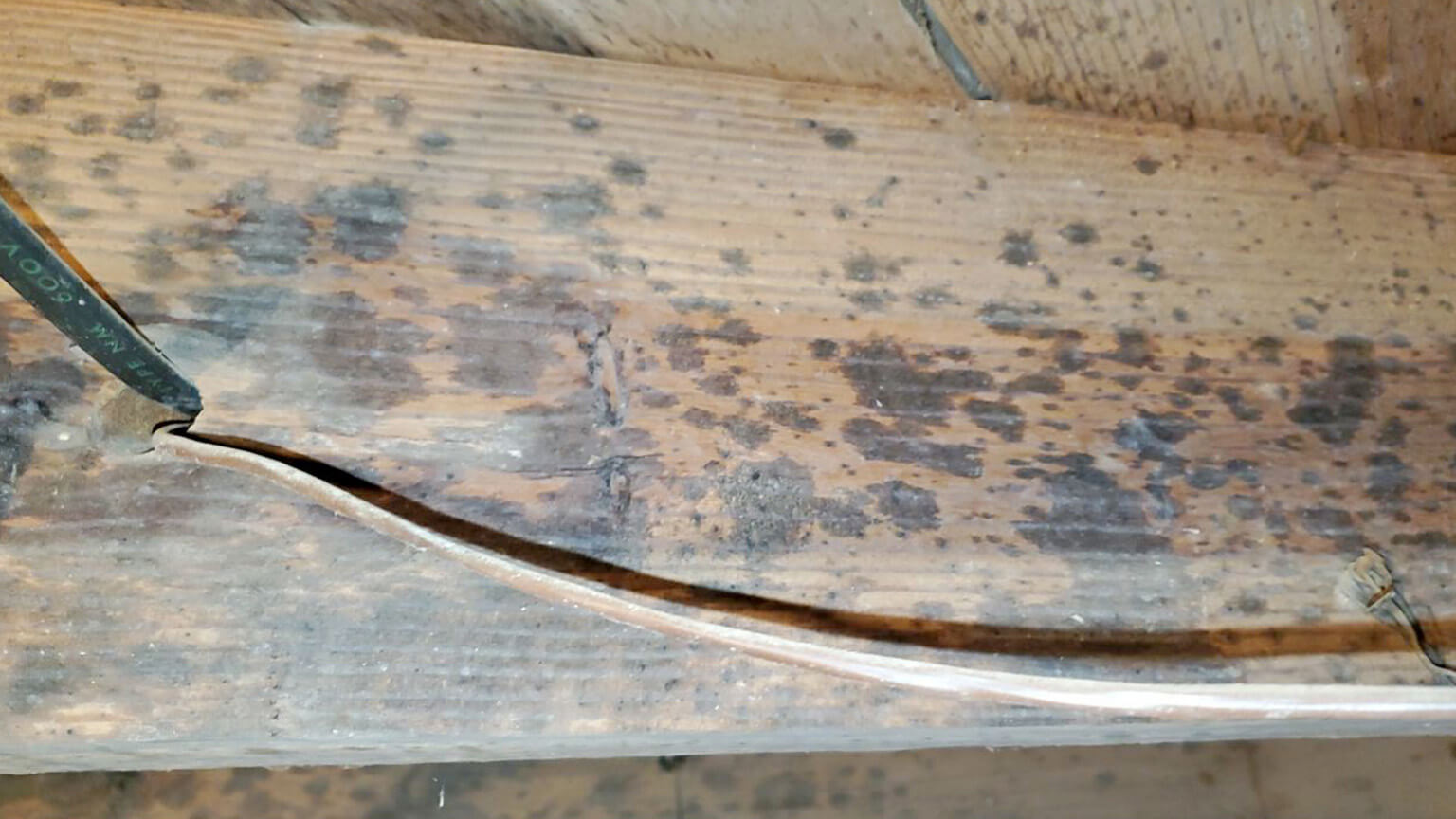
Most mold removal products sold at hardware stores are designed to kill surface growth. On a tile floor or a glass shower door, that can be enough. On wood joists, OSB sheathing, drywall, or crawl space insulation, it isn’t. Those are porous materials, and mold doesn’t just sit on top of them. It grows into them, and a spray that cleans the surface can leave the root structure behind entirely intact.

Bleach is the most common example. It works on non-porous surfaces, but when applied to wood or drywall, the water component absorbs into the material while the active ingredient stays on top. The visible stain may fade, but the mold colony underneath continues growing. A few weeks later, the same spot looks exactly as it did before, sometimes worse because the added moisture created better growing conditions.

The other problem is that scrubbing or wiping mold without proper containment disperses spores into the air. Mold reproduces by releasing spores, and disturbing a colony without sealing off the area first sends those spores drifting into adjacent spaces. A mold problem in one corner of a crawl space can spread to floor insulation, subfloor framing, and eventually into the living space above if it’s disturbed without the right precautions in place.

How Much Mold Is Actually There?

One of the most common mistakes homeowners make is treating only what they can see. A visible patch of mold on a basement wall or a section of discolored insulation in a crawl space looks like a contained problem. It usually isn’t.

Mold follows moisture, and moisture doesn’t stay in one place. It migrates through building materials, collects in low spots, and works its way into areas that don’t get looked at often. By the time mold is visible on a surface, it has frequently already spread to surrounding framing, adjacent insulation, or the back side of materials that look clean from the front. A crawl space with a visible mold patch on one joist bay may have growth across a much wider area that only becomes clear once someone is actually down there with a light and knows what to look for.

This is where DIY attempts run into a fundamental limitation. Without a full inspection, there’s no reliable way to know the actual scope of the problem. Treating a visible spot and calling it done leaves untreated growth in place, and that growth doesn’t stay put. It continues to spread, and the moisture conditions that produced it in the first place haven’t changed.

The Source Problem: Why Mold Keeps Coming Back

Removing mold without addressing what caused it is the most fundamental reason DIY remediation fails. Mold is not a random occurrence. It grows because conditions in a specific part of your home are supporting it, and those conditions don’t change because you cleaned a surface.

In Richmond-area homes, the most common drivers are moisture intrusion through foundation walls, condensation in poorly ventilated crawl spaces, and ground moisture that has never been properly managed. Virginia’s humid summers make crawl spaces especially vulnerable. When warm, moist air meets the cooler surfaces of a crawl space, it condenses, and that steady supply of moisture is exactly what mold needs to establish and spread.

A homeowner who cleans visible mold but leaves a damp crawl space unaddressed will have mold again. It may take a few weeks or a few months depending on conditions, but it will return because nothing about the environment changed. Professional mold remediation treats the growth and identifies what’s feeding it, whether that’s a vapor barrier that was never installed, a drainage problem along the foundation, or a crawl space that needs an encapsulation to cut off the moisture supply for good.

The Health Risks of DIY Mold Removal

Mold exposure is a genuine health concern, and the risk goes up significantly when a colony is disturbed without the right protective equipment. Scrubbing mold barehanded or with a basic dust mask does very little to limit exposure. Mold spores are microscopic, and standard hardware store masks are not rated to filter them effectively.

Common health effects from mold exposure include:

  • Respiratory irritation and difficulty breathing
  • Worsening asthma or allergy symptoms
  • Chronic sinus congestion
  • Headaches and fatigue
  • Eye, throat, and skin irritation

People with compromised immune systems, young children, and the elderly face higher risks, but prolonged exposure is a problem for otherwise healthy adults as well.

Disturbing Mold Without Containment Makes It Worse

One of the less obvious risks of DIY mold removal is what happens to the spores that get displaced during the process. Mold reproduces by releasing spores into the air, and when a colony is scrubbed, wiped, or disturbed without sealing off the area first, those spores don’t disappear. They become airborne and travel.

In a home with a central HVAC system, this is a serious problem. A system that’s running while mold is being disturbed can pull spores into the return air, circulate them through the ductwork, and deposit them in rooms that had no mold issue before. What started as a crawl space problem can end up affecting bedrooms, living areas, and other parts of the home that were never involved.

Professional remediation addresses this directly. Containment barriers isolate the work area before any removal begins, negative air pressure keeps spores from migrating outward, and the HVAC system is shut down for the duration of the work. These aren’t extra steps that professionals add for appearances. They’re the reason professional remediation actually contains the problem instead of spreading it.

What Professional Mold Remediation Actually Involves

Professional mold remediation is a different process from cleaning, and understanding what it covers helps explain why DIY attempts fall short by comparison.

It starts with a thorough inspection of the affected area and the surrounding structure. The goal isn’t just to find visible mold but to identify the full extent of the growth and trace it back to its moisture source. That assessment drives everything that follows.

From there, the work typically includes:

  • Containment of the affected area to prevent spore migration during removal
  • Shutdown of the HVAC system to avoid circulating displaced spores
  • Removal of contaminated materials that cannot be cleaned, such as saturated insulation or heavily affected drywall
  • Treatment of affected surfaces using methods appropriate for the material type
  • Addressing the moisture source directly, whether that means improving drainage, installing a vapor barrier, or recommending crawl space encapsulation

That last point is what makes the difference between a result that holds and one that doesn’t. Kefficient’s approach to mold remediation includes identifying what’s driving moisture into the space and recommending the right solution to cut it off. Removing mold from a crawl space that still has a ground moisture problem is a temporary fix. Pairing remediation with encapsulation or waterproofing is what produces a lasting one.


Don’t Wait for Mold to enter your home Take Control Today!


Mold spreads quietly and quickly, and the longer conditions stay the same, the more ground it covers. If you've spotted growth in your crawl space or basement, or you're dealing with recurring musty odors that won't go away, the most useful next step is an honest assessment of what's actually there. Kefficient offers free mold inspections for homeowners in Richmond and across central and eastern Virginia. The inspection covers the visible growth, the areas around it, and the moisture conditions driving it, so you know the full picture before any decisions are made.