Most homeowners looking to cut energy costs never think about the crawl space. A wet or unencapsulated crawl space feeds humid outside air into the living space above it through the stack effect, making the HVAC system work harder every month.


Quick Summary:
An unencapsulated crawl space pulls humid outside air into the living space above it through the stack effect, forcing the HVAC system to run longer and work harder than it should. Wet insulation underperforms, floors feel uneven, and utility bills reflect it. A crawl space encapsulation seals the space, closes off exterior vents, and cuts the cycle off at the source. Kefficient holds IICRC certification, has earned the BBB Torch Award, and offers free inspections across central and eastern Virginia.
Most homeowners looking for ways to lower their energy bills start with the thermostat, the windows, or the attic. The crawl space rarely comes up. It sits out of sight under the house, and as long as nothing is visibly wrong, it tends to stay off the list entirely.
That oversight is expensive. A wet or unencapsulated crawl space pulls warm, humid air into the living areas above it and forces the HVAC system to compensate for conditions it was never designed to handle on its own. The result shows up on the utility bill every month, and most homeowners never connect it to what is happening underfoot.
A crawl space is not a sealed compartment. Air moves through it, and in an unencapsulated crawl space, that air comes from outside. In Virginia, where summer humidity regularly climbs into the high eighties and nineties, the air pulling into the crawl space carries significant moisture before it ever touches the floor joists or insulation above it.
What happens next is called the stack effect. Warm, humid air rises through gaps in the subfloor, around plumbing penetrations, and through unsealed openings into the living space above. As that air moves up through the house and escapes through the upper levels, it draws more outside air in from below to replace it. The crawl space becomes the intake point for a continuous cycle of outdoor air moving through the home, and the HVAC system runs longer trying to condition air it was never sized to handle.
Humidity is harder to remove from air than heat. An air conditioner that is working to cool a room is also pulling moisture out of the air, and the wetter the air, the longer the system runs to reach a comfortable humidity level. A crawl space feeding humid outside air into the house through the stack effect is adding to that load continuously during warm months.
The effect compounds in a few ways. Wet insulation under the floor loses its effectiveness, meaning less of the conditioned air stays where it is supposed to. Floor joists and subfloor materials that have absorbed moisture conduct temperature differently than dry wood, making floors feel cold in winter and contributing to uneven temperatures throughout the house. The system works harder, cycles more frequently, and wears faster than it would in a properly sealed home.
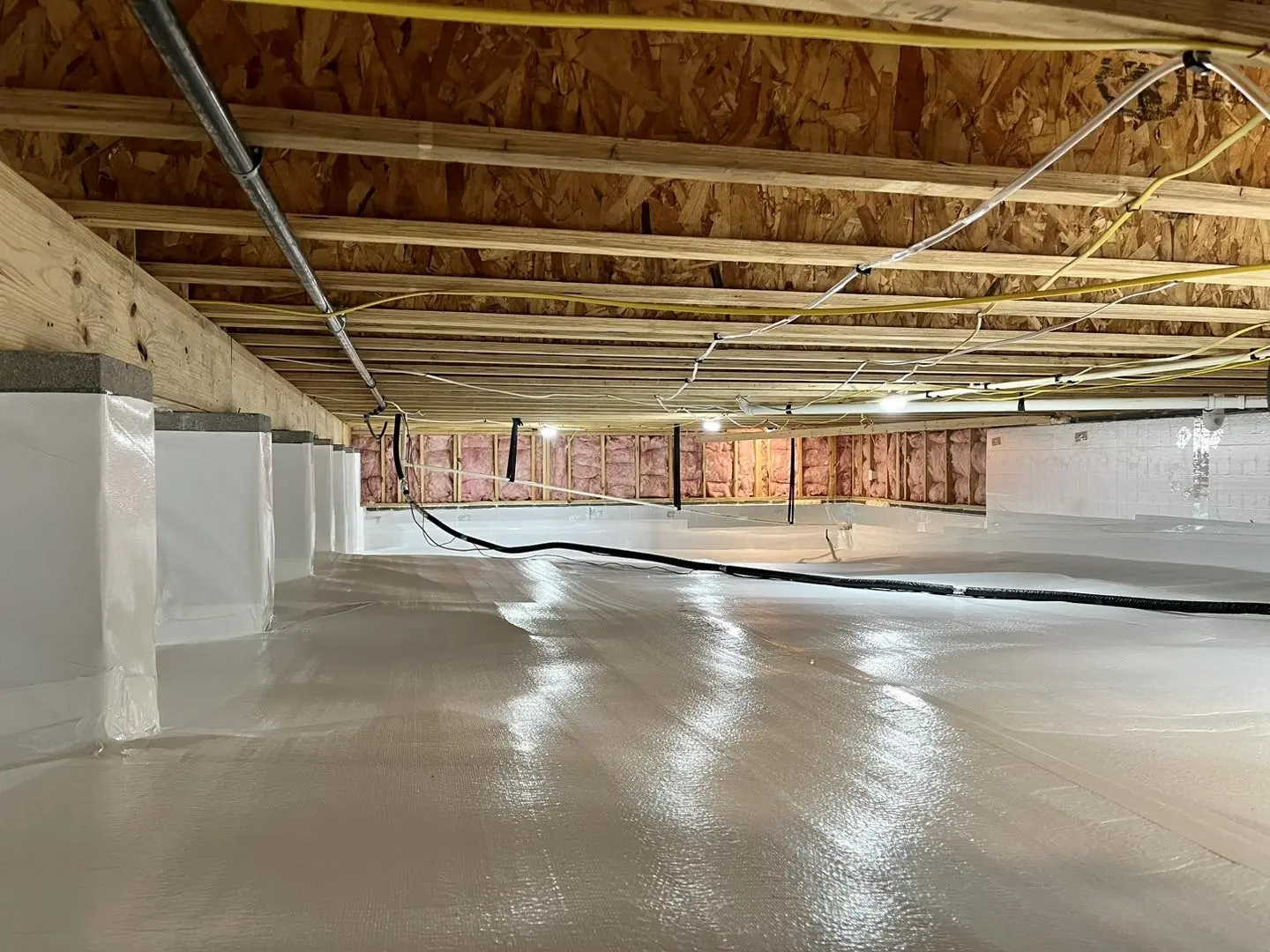
A crawl space encapsulation seals the space from outside air and ground moisture. A heavy-duty vapor barrier covers the floor and walls, and the vents that previously allowed outside air to circulate underneath the house are closed off. The crawl space stops being an extension of the outdoors and becomes part of the conditioned envelope of the home.
The practical result is that the stack effect loses its fuel source. Without a continuous supply of humid outside air moving up through the floor, the HVAC system conditions the air it was designed to condition. Insulation performs closer to its rated value. Floors stabilize. Homeowners who have had a crawl space encapsulation done frequently report lower utility bills within the first full season, along with more consistent temperatures from room to room.
For homes with attic insulation that has underperformed, a crawl space encapsulation is often part of the answer. Sealing the bottom of the house reduces the volume of unconditioned air moving through it, which makes everything above the crawl space work better.
Kefficient’s crawl space team serves homeowners across central and eastern Virginia, from Richmond and Chesterfield to Fredericksburg and Charlottesville. Every crawl space encapsulation is backed by the IICRC certification Kefficient holds as a firm, which sets the standard for how moisture and contamination work gets done.
Kefficient has earned the BBB Torch Award, the Better Business Bureau’s recognition for businesses that demonstrate an outstanding commitment to ethical practices. It is a higher bar than an A+ rating alone, and it reflects how Kefficient has handled its customers and its work since opening. If your energy bills have been climbing and the usual fixes have not made a dent, the crawl space is worth a look.
Schedule a free inspection and find out what is happening underneath your home.
Mold spreads quietly and quickly, and the longer conditions stay the same, the more ground it covers. If you've spotted growth in your crawl space or basement, or you're dealing with recurring musty odors that won't go away, the most useful next step is an honest assessment of what's actually there. Kefficient offers free mold inspections for homeowners in Richmond and across central and eastern Virginia. The inspection covers the visible growth, the areas around it, and the moisture conditions driving it, so you know the full picture before any decisions are made.